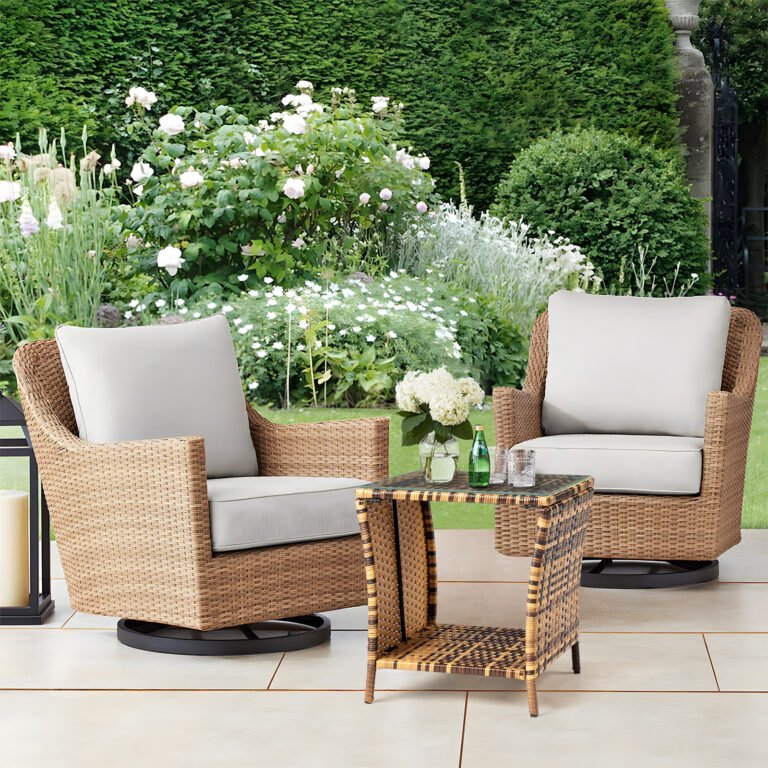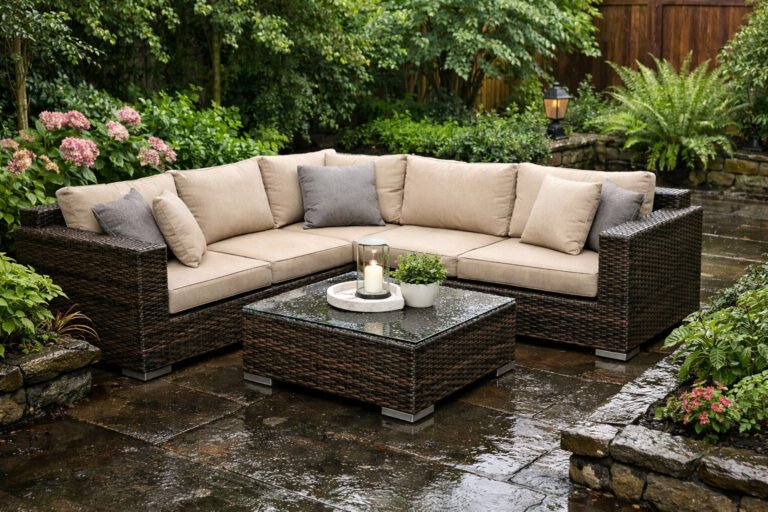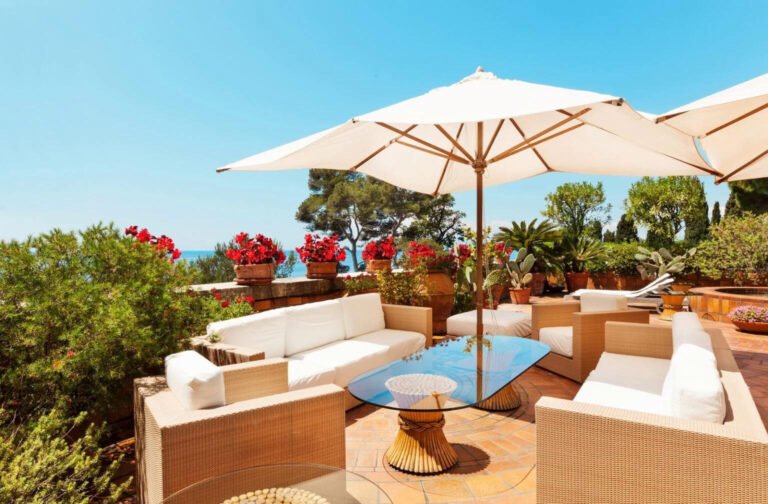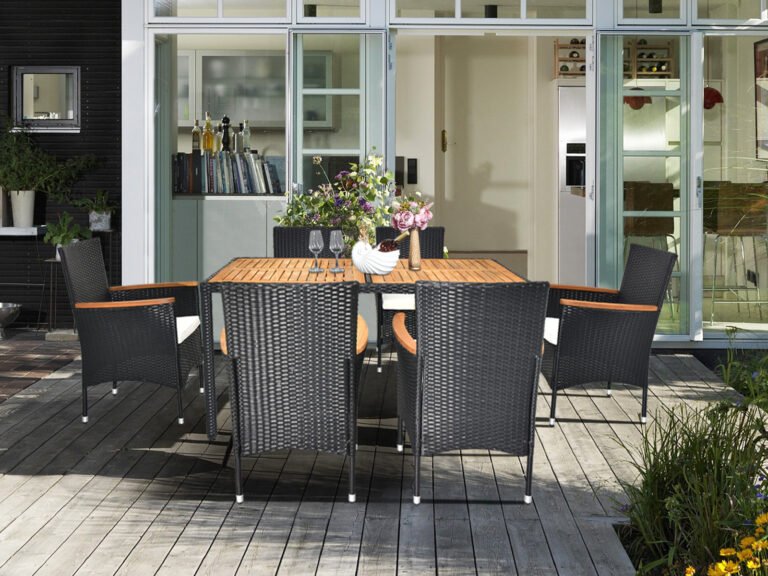
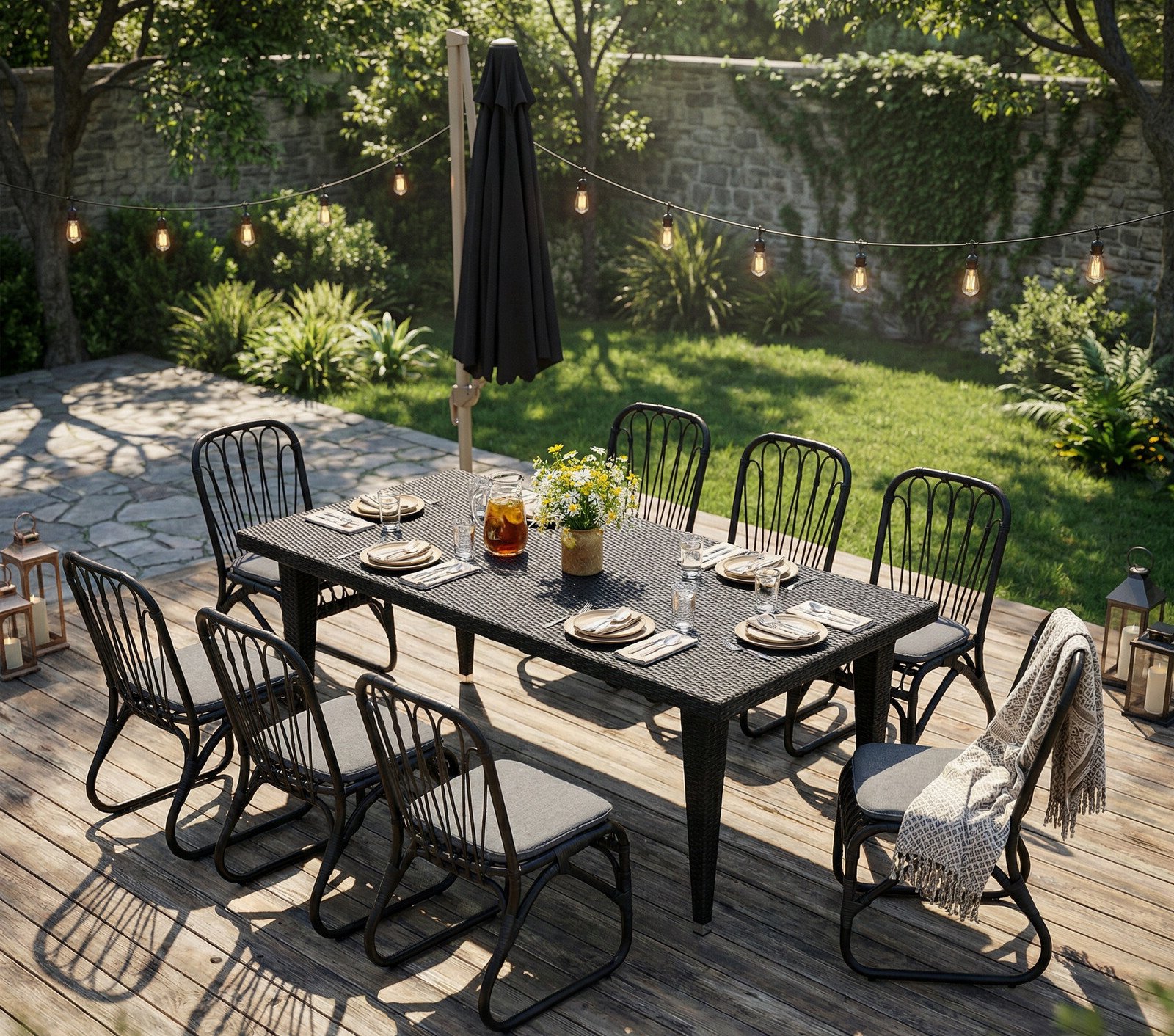
In the U.S., backyard season isn’t just about buying furniture—it’s about hosting without stress. Whether you’re planning a weekend BBQ, a casual neighborhood get-together, or a family dinner under string lights, the difference between a “crowded patio” and a space that feels effortless is usually one thing:
Your dining layout—and the right dining set size.
This guide is built around real hosting constraints (walkways, serving flow, grill clearance, and cleanup). You’ll learn how to choose the right rattan dining set by patio size, seat count, table dimensions, materials, and party flow, so your outdoor meals feel easy—every time.
👉 If you’re ready to browse options while you read, start here: Rattan Dining Sets for Outdoor Gatherings.
In This Guide
Why a Rattan Dining Set Beats a Lounge Set for BBQ Nights
Outdoor sectionals are amazing for lounging—but when food shows up, they often become the wrong tool for the job.
A proper outdoor dining set solves three common hosting problems:
- Comfortable eating posture: Dining chairs support a more upright posture, which is better for long meals and conversation.
- Correct height for real meals: Standard outdoor dining tables are typically 28″–30″ high, designed to pair with chairs around 18″–20″ seat height.
- Cleaner serving flow: Guests can get in/out and pass plates without bumping into low coffee tables or deep lounge seating.
If your goal is “people stay longer and the meal feels organized”, a dedicated dining set is the easiest upgrade.
Step 1: Choose the Right Dining Set Size (By Patio Size + Guest Count)
Before you decide “4-seater vs 6-seater,” decide your non-negotiable space rule:
The one rule that prevents 90% of patio layout problems
Keep a true walkway: 30″ minimum.
If guests need to turn sideways to pass behind chairs, the set is too big for your space.
Quick pro trick (works every time)
Use painter’s tape to outline the table footprint on the patio. Then:
- pull an imaginary chair out, and
- walk from the door to the “drink station” area.
If it feels tight now, it will feel worse with people, plates, and coolers.
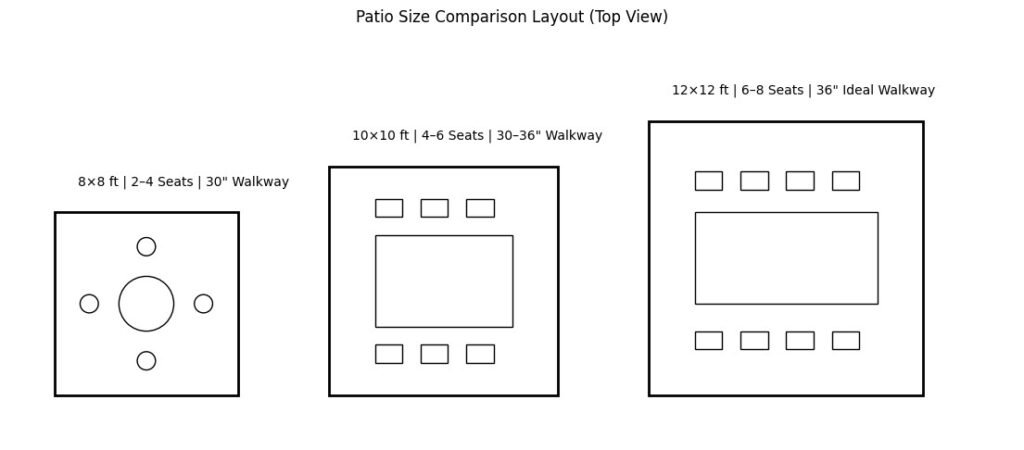
Table 1 — Patio Size → Best Dining Set (Seat Count, Table Size, Walkway)
| Patio size (approx.) | Best set size | Best table size range | Minimum clear walkway | Best for |
|---|---|---|---|---|
| ≤ 8×8 ft (64 sq ft) | 2–4 seats | Round 30″–42″ or compact square | 30″ | Small households, coffee + casual meals |
| 10×10 ft (100 sq ft) | 4–6 seats | Rectangular 60″–72″ x 36″ (or 48″–54″ round) | 30″–36″ | The “sweet spot” for BBQ + hosting |
| ≥ 12×12 ft (144 sq ft) | 6–8 seats | Rectangular 84″–96″ (or extendable) | 36″ ideal | Regular hosting, bigger gatherings |
Designer note:
Round tables feel easier in tight spaces because there are no corners and circulation is smoother. Rectangular tables win when you host often and want “buffet-style” plating space.
Related reading (size planning): How to Choose the Right Size Rattan Outdoor Furniture (Patio, Balcony, Small Yards).
Step 2: Backyard Party Layout That Feels Easy (Flow > Furniture Count)
Most patio setups fail because they’re arranged like a showroom, not like a party.
A good hosting layout follows one simple idea:
Build around a “party path”
Door → Drinks → Grill → Table → Cleanup
When that path is clear, everything feels calmer—even in a small yard.
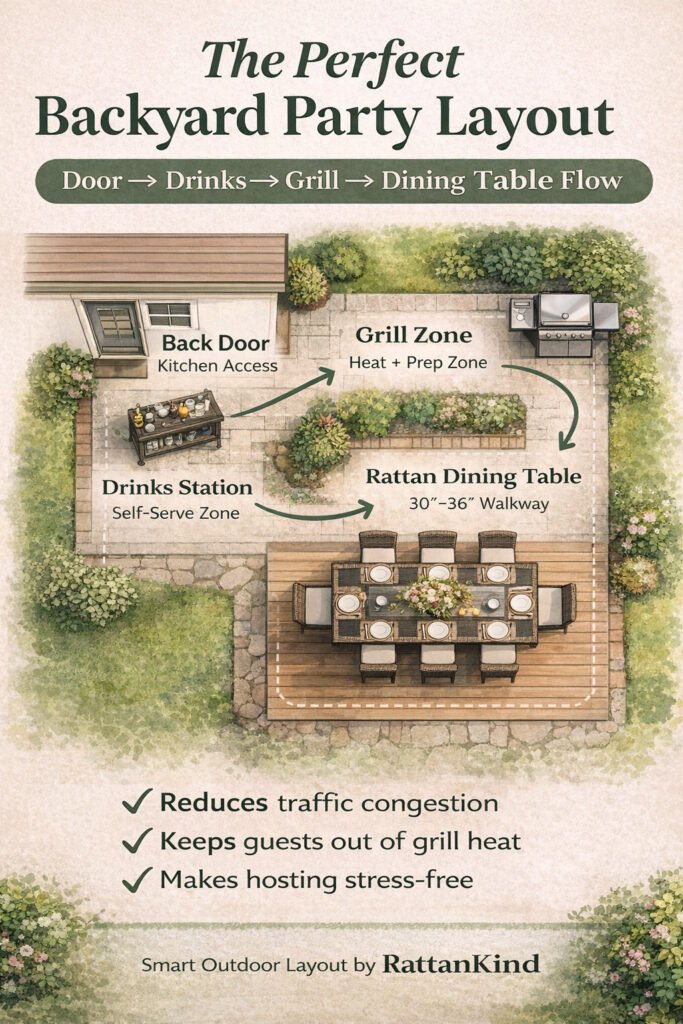
Table 2 — Hosting Clearances (So Guests Can Move Like Adults)
| Zone | Recommended clearance | Why it matters | If space is tight… |
|---|---|---|---|
| Main walkway (door to seating) | 30″–36″ | Prevents bottlenecks | Use a smaller table / armless chairs |
| Space behind dining chairs | 24″–30″ | Lets people stand up easily | Choose slimmer chair profiles |
| Grill zone to dining zone | 48″–60″ | Keeps heat/smoke away and avoids collisions | Put the drink station between zones |
| Drink station corner | 24″+ | Keeps cups/ice off the dining table | Use a small side table or bar cart |
Placement that works in real homes
- Put the table where you can serve easily. If you’re walking through chairs with hot food, move the table.
- Keep the drink station off the dining tabletop. It reduces clutter and keeps the meal space clean.
- If wind is strong: place the table closer to a wall or under a cover/umbrella to stop napkins from flying.
Related layout guide: Outdoor Furniture Layout Ideas for Small Patios (8×8, 10×10 & 12×12).
Step 3: Choose Materials That Survive Real Outdoor Life (Sun, Rain, Grease)
A backyard dining set needs to handle UV exposure, humidity, spills, and frequent cleaning—not just look good in photos.
The “3-part durability formula”
- All-weather PE rattan (not natural rattan)
- Powder-coated aluminum frame (best for outdoor dining)
- Tempered glass tabletop (easy wipe-down after BBQ)
Table 3 — Dining Set Materials Checklist (What to Look For + What to Avoid)
| Component | Look for | Why it matters | Avoid |
|---|---|---|---|
| Rattan weave | All-weather PE (resin) rattan, UV-stabilized | Resists fading, cracking, moisture | Natural rattan outdoors |
| Frame | Powder-coated aluminum | Won’t rust, easier to move | Untreated steel in humid/coastal zones |
| Tabletop | Tempered glass (easy clean) | Wipes clean fast after sauces/oils | Surfaces that stain or warp |
| Cushions | Quick-dry foam + removable covers | Comfort for long meals + easier washing | Indoor cushions outdoors |
Deep Reading:
- How to Protect Rattan Outdoor Furniture from Sun Damage & Fading
- Best Rattan Patio Furniture for Rainy or Humid Climates
Step 4: Hosting Tips — Seat 8–10 Guests Without Buying a Massive Set
You don’t need a giant dining set to host well. You need flexibility.
1) Use the “core table + flex seating” strategy
- Choose a set that fits daily life (usually 6-seater)
- Add 2–4 stackable chairs only when needed
- Store extras in a garage corner or storage area
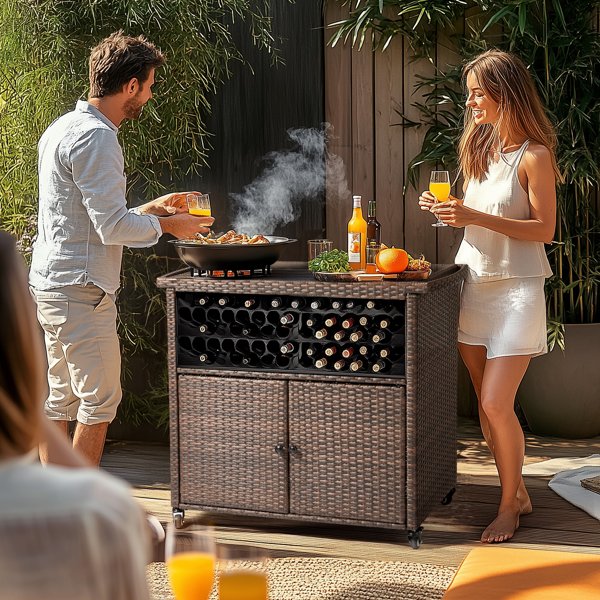
2) Create a “service zone” so your table stays clean
A small side table or bar-cart-style surface works as:
- drink station
- condiment & paper goods area
- dessert landing zone
Your dining table becomes what it should be: a place to eat and talk.
3) Make comfort a priority (guests stay longer)
If your chairs are supportive and cushions are decent, people naturally linger—and that’s the whole point of hosting.
Common Mistakes That Make Backyard Dining Feel Tight
- Buying by “piece count” instead of table size + seating space
- Blocking the door-to-table walkway
- Choosing lounge furniture for dining-heavy hosting
- Ignoring sun exposure (leading to faster fading/cracking)
- No plan for cushions (clutter + mildew + frustration)
If the patio feels crowded, don’t “decorate harder.”
Remove one item, restore the walkway, and rebuild around a clear anchor: the table.
A Simple 3-Step Buying Plan (Fast + Reliable)
- Measure your usable area (exclude doors, grills, planters that can’t move).
- Reserve your walkways (30″ minimum; 36″ ideal).
- Choose the set size (4/6/8) using the table above—and match materials to your climate.
FAQ
What size dining set is best for a 10×10 patio?
A compact 4–6 seat set usually fits best. Aim for a 60″–72″ rectangular table or 48″–54″ round, and keep at least a 30″ clear walkway.
Should my patio dining table go against the wall?
Only when the space is very tight. Most patios feel more “designed” when the table is placed to preserve flow—especially between the door, grill, and seating.
What’s the best tabletop for outdoor dining?
For most homes, tempered glass is the easiest: it’s quick to wipe clean after sauces and oils and handles outdoor conditions well.
Is PE rattan durable enough for BBQ patios?
Yes—high-quality all-weather PE rattan can last for years outdoors when paired with a good frame and basic care. UV protection and climate-appropriate maintenance matter most.
Ready to Host Without the Layout Stress?
If your goal this season is simple—easy meals, relaxed conversation, and a backyard that feels effortless—start with the right dining set size and the right hosting flow.
👉 Explore our collection here: Outdoor Rattan Dining Sets. Free Shipping from U.S. Warehouses & 30-day returns.